
Can you turn brain teasers into a powerful ESL creative writing activity? Absolutely. Logic puzzles and word games add variety to your lessons, keep motivation high, and create natural moments for ESL writing practice. With the right structure, you can turn quick puzzles into rich ESL classroom activities that build vocabulary, grammar accuracy, and clear written explanations.
In this post, you’ll see how to use logic puzzles as the backbone of an ESL writing lesson, how to turn them into creative ESL prompts, and how to add simple conditional writing practice without redesigning your whole course.
Why this word games activity works in the classroom
Many learners love puzzles and word games, but teachers often stop at the “fun warm-up” stage. That’s a missed opportunity. When you add writing tasks, every puzzle becomes a mini ESL writing lesson with clear language goals.
Logic puzzles and word games:
- Focus attention on short reading passages with a clear purpose: understanding the problem.
- Encourage students to speak up as they negotiate solutions in pairs or small groups.
- Stimulate recall of long-forgotten words, especially adjectives, verbs, and numbers.
- Foster deeper learning as students notice patterns, justify answers, and explain their reasoning in English.
Because puzzles are short, they work well as sponge activities, lesson openers, or 10-minute diversions that still push students to read, think, speak, and write. High-beginner to intermediate learners get a gentle challenge without feeling overwhelmed by long texts.
Word games
This quick word-and-thinking activity boosts vocabulary recall, sharpens pattern recognition, and gives teachers an effortless way to spark lively problem-solving talk.

Step-by-step ESL writing lesson using word games
Here is one simple flow you can reuse with almost any puzzle-based ESL creative writing activity.
1. Warm-up and pre-teach key words
Choose one puzzle and pull out any tricky vocabulary: well, bucket, slide down, meter, pattern, rhyme, silent letter, and so on. Briefly check the meaning with quick examples or pictures, not long explanations.
2. Silent reading and pair discussion
Ask students to read the puzzle quietly. Then have them work in pairs or small groups to discuss possible answers in English. This stage builds confidence and ensures everyone has something to say before writing.
3. Short explanation writing
Now, turn it into ESL writing practice. Ask learners to write a short paragraph that:
- States their answer.
- Explains how they reached it, step by step.
- Uses key target grammar (for example, past tense or conditionals).
You can frame this as a mini “exam answer” or as a clear explanation to a friend who has never seen the puzzle.
4. Conditional writing practice (optional layer)
To deepen the activity, add conditional writing practice:
- If the well were 40 meters deep, how would the answer change?
- If the buckets had different sizes, what would you do?
- If you could add one more rule to the game, what would it be?
Students now move beyond comprehension and start using creative ESL prompts built directly on the puzzle, without any extra materials.
5. Share, compare, and refine
Have learners read each other’s answers, underline useful phrases, and correct one or two grammar mistakes. You can collect common errors on the board and rewrite better sample sentences together.
Logic puzzle and word games: five favorites
Here are five logic puzzles and word games which I have used with success in high-beginner to intermediate ESL conversation classes as sponge activities or 10-minute diversions.
1 Monkey in the Well

This is a popular puzzle, so don’t be surprised if your students know the answer. That is not the point. The objective is to explain the answer with a degree of precision.
There is a monkey at the bottom of a well. The well is 30 meters deep. Each morning, the monkey climbs up three meters. Every evening, the monkey slides down two meters. There is no water in the well, and there are no tools. How long will it take the monkey to get out of the well?
2. Five Words
Look at these five words: red, gray, brown, black, pink. Can you name at least five things these words have in common?
3. Unusual Words
- What musical word is written with the letters xop in a row?
- What common word has three u’s?
- Read these four words aloud: buffet, ballet, whistle, castle. What do these words have in common?
- Make four words using these letters: itde.
- Name four words with a silent b.
- Name two words that rhyme with pool, ground, and goal.
4. Number Conundrum
Here are three groups of numbers.
- 7, 14, 21
- 9, 18, 27
- 10, 20, 300
There is one pattern that explains the change in the numbers for all three groups. What is the pattern?
5. Buckets of Water
This classic logic puzzle, made famous in an old Die Hard movie, requires students to think through several operations and give a step-by-step answer.

You are standing beside a well with two buckets. One bucket holds five liters. The other bucket holds three liters. How can you get exactly four liters of water using only these two buckets? You have no other tools, and the buckets have no measurement lines.
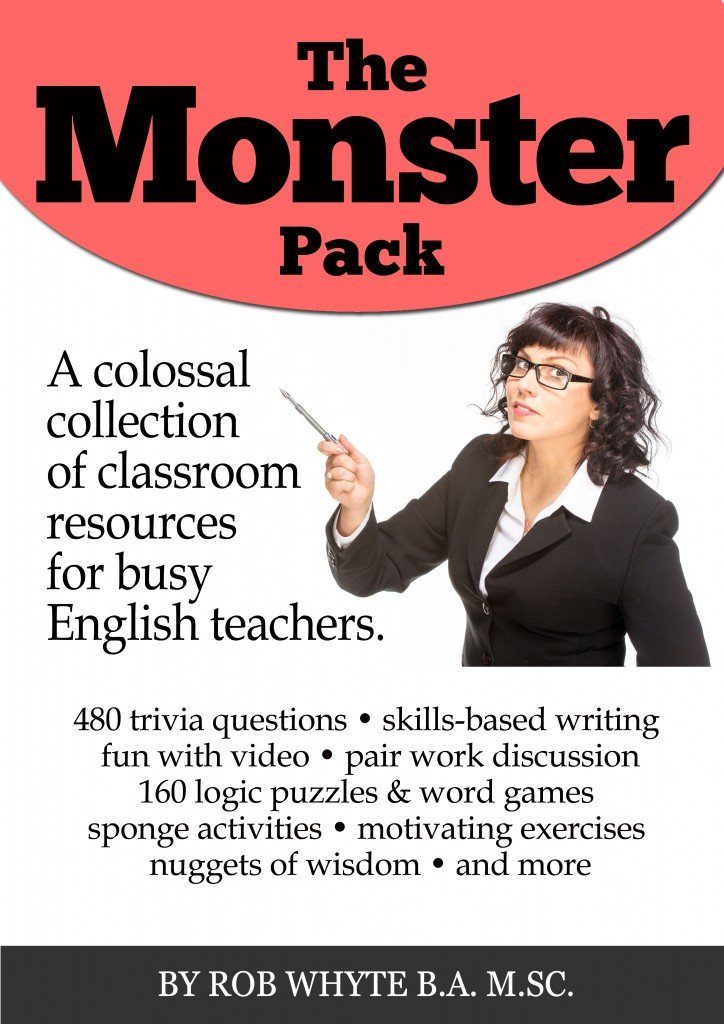
Get great lessons
This ebook is positively bursting with ready-to-go lessons that require low or no prep.
Every teacher needs a set of go-to lessons taht engage and help build language and thinking skills.
Click the ebook image to learn more and buy.
Conclusion: From word games to powerful writing practice
Logic puzzles and word games fit naturally into any ESL writing lesson when you add structured explanation and reflection. With just a few minutes of setup, you can transform a simple brain teaser into a rich ESL creative writing activity that builds comprehension, accuracy, and confidence. Start with one puzzle, add a short writing task, and watch your students surprise you with their reasoning and creative language.