
If you want to spark imagination and build real writing confidence, this ESL creative writing activity gives students an engaging way to experiment with voice, tone, and perspective. By stepping into the mind of an AI assistant—or a classroom robot—students practice narrative skills while strengthening grammar patterns such as the present perfect and present perfect continuous. This lesson fits perfectly into any ESL writing lesson, especially when you want an approachable task that still challenges higher-level thinking.
Why This ESL Writing Activity Is So Effective
Many students struggle to find their “writer’s voice,” especially in a second language. Writing as a fictional robot liberates them from perfection pressure. Because students imagine how technology thinks, observes, and interprets human behavior, they naturally use more descriptive vocabulary and metaphorical language. This makes the activity ideal for creative ESL prompts that push learners into richer expression.
It also works beautifully as ESL writing practice because the robot’s viewpoint forces clear grammatical choices. The robot observes human behavior (“I have watched students…”, “They have been using technology…”) which naturally aligns with the present perfect and present perfect continuous. The structure supports hesitant writers because it removes the fear of writing about themselves. Instead, they follow a playful, creative frame.
Finally, students love imagining that the classroom AI has thoughts, feelings, and commentary about how humans use it. This keeps motivation high and lowers anxiety—two crucial ingredients for any successful ESL classroom activity.
Imagine a world
A thoughtful robot finally speaks up about everything it has been noticing in class.
Turns out, your AI assistant has opinions—and a surprisingly charming personality.

Step-by-Step Creative ESL Writing Lesson Flow
1. Introduce the Concept with a Quick Warm-Up
Start your lesson by asking students a simple question: “If your classroom AI assistant could talk, what would it say about how you use technology?”
Give them two minutes to brainstorm ideas with a partner. This sparks imagination and encourages oral rehearsal before writing.
2. Model a Sample Robot Voice
Show students a short example such as:
“I have been observing the students in this classroom for three months. They have uploaded hundreds of assignments, and I still don’t understand why they sigh every time the Wi-Fi slows down.”
Briefly highlight the tone—slightly humorous, observant, and curious. Point out the use of the present perfect (“have uploaded”) and present perfect continuous (“have been observing”).
3. Establish the Writing Task
Tell students they will write a short paragraph or mini-story from the perspective of a classroom robot or AI assistant. Their piece must include:
• A clear robot “voice”
• At least two examples of the present perfect
• At least two examples of the present perfect continuous
• One metaphor or figurative comparison
This structure makes the task friendly for beginners and rich for advanced learners.
Get ready to go lessons
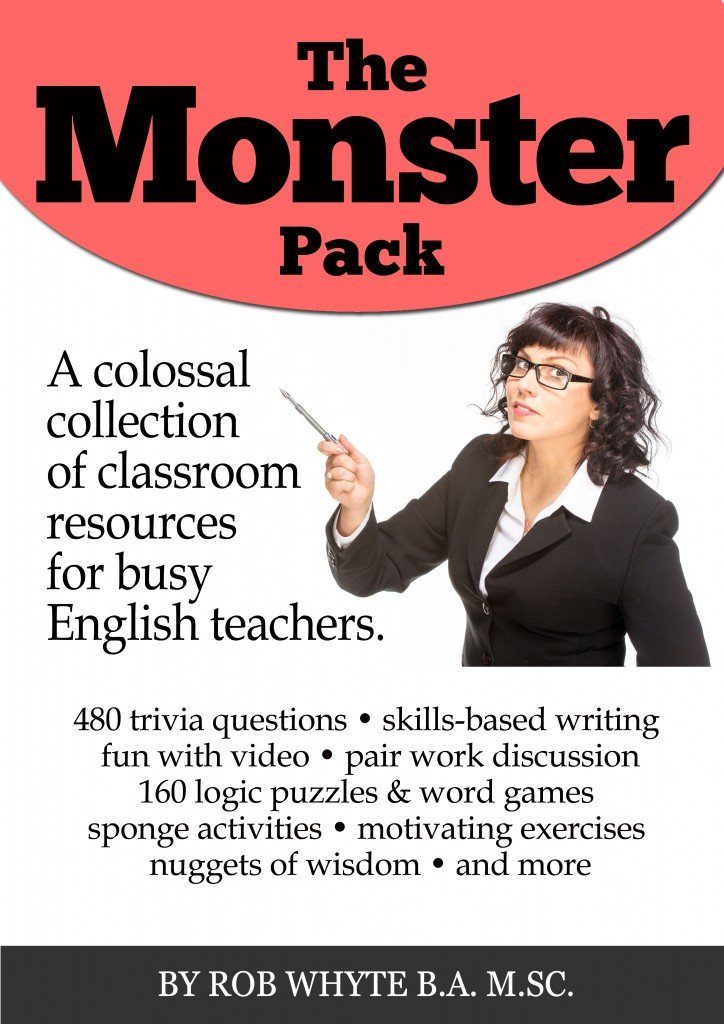
The Monster Pack is filled with ready-to-go classroom activities.
An ebook bursting with back-pocket ideas when you need something fresh and engaging for the classroom.
Click the ebook image to learn more and buy!
4. Guided Planning with Creative ESL Writing Prompts
Offer a few planning questions:
• What daily habits has the robot observed?
• What has the robot learned from students?
• What has the robot been struggling to understand?
• What metaphor might the robot use? (“The classroom feels like…”)
These prompts support students who need more scaffolding for conditional writing practice and descriptive detail.
5. Drafting Time
Give students 10–12 minutes of uninterrupted writing time. Encourage them to write freely—remind them that the goal is creativity, not perfection. Walk around to support vocabulary choices or expand ideas.
6. Peer Sharing
Have students exchange writing with a partner. They should comment on:
• What the robot’s personality sounds like
• Whether the tone is consistent
• What present perfect forms they notice
This helps students internalize grammar in a meaningful way rather than through mechanical exercises.
Extensions for More Creative ESL Writing Activities
Rewrite from a Human’s Viewpoint
Ask students to write a quick reply from the human student to the robot, defending their behavior. This builds contrast in voice and adds playful dialogue.
Introduce Conditional Writing Practice
Have students add lines such as:
• “If I were a human, I would…”
• “If they used technology better, I could…”
This pushes them into higher-order grammar and richer creativity.
Conclusion: A Playful Way to Build Voice and Grammar
This robot-themed ESL creative writing activity blends structure with imagination, helping students build narrative voice, experiment with tone, and practice essential grammar patterns. It works across proficiency levels, keeps engagement high, and empowers even shy students to produce vivid, creative language. When students step into the mind of an AI assistant, they develop stronger writing habits—and have a lot of fun doing it.