Here’s an ESL activity that can produce several aha moments. Teach students to construct arguments. It’s a vital skill that promotes clear thinking, precise writing and concise speaking.
INTRODUCTION TO ARGUMENTS
Learning Outcome
- By the end of this lesson, students should be able to identify the parts of an argument and construct examples from the prompts.
WHAT IS AN ARGUMENT?
An argument is an idea that we suggest is true. It has two parts: a claim and at least one premise.
Part 1 Claim
Claim: a statement that can be true or false. For example:
- There is more air pollution these days.
- Vegetables are good for you.
Not all sentences are claims. The following are not claims because they cannot be true or false:
- Questions (e.g. What time is it?)
- Exclamations (e.g. Oh my god!)
- Greetings (e.g. Hi Mom)
- Conditional sentences (e.g. If sentences.)
- Proposals (e.g. Let’s eat meat tonight.)
- Instructions (e.g. Open the door, please.)
Part 2 Premise
A premise is a phrase, sentence or many sentences that tells us why (or sometimes how) we should believe a claim. For example:
- There is more air pollution because energy companies are burning a lot more coal.
- Vegetables are good for you because they contain nutrients and fibre.
Part 3 Tip
Here is one way to find a claim and premise in a story, book, or speech. Simplify complex ideas with this sentence pattern. The claim will come before the word because.
- The writer believes (claim) because (premise).
PRACTICE 1
Describe the argument in these sentences.
- Given that these pills are all natural, they are totally safe.
- There’s probably no God, so stop worrying and enjoy your life.
- Since light takes time to reach our eyes, everything we see actually existed in the past.
PRACTICE 2
Read the text. What is the argument?
Most Americans eat at fast-food establishments more than once a week. Many re searchers agree that these eating habits are the leading cause of obesity in the U.S. Obesity-related diseases such as diabetes and hypertension cost our health care system billions of dollars each year. Whether through health care insurance premiums or taxes, everyone suffers the consequences even if you eat only healthful, home-cooked meals.
Therefore, we should impose a small tax on every high-calorie meal served at fast-food chains. This would not only offset obesity-related health care costs, but encourage consumers to seek out healthy food options.
PRACTICE 3
Below are 5 claims. Change the claims into arguments by adding 2 or 3 premises.
- Cooking at home is a good idea for university students.
- People should drive compact cars.
- Getting a job these days is hard.
- Teaching in elementary school is a good job.
- Writing a good composition is difficult.
Answers
This lesson plan and the answers are on a pdf. Download the worksheet here. The worksheet also includes suggested arguments for the extension activity below.
Extension
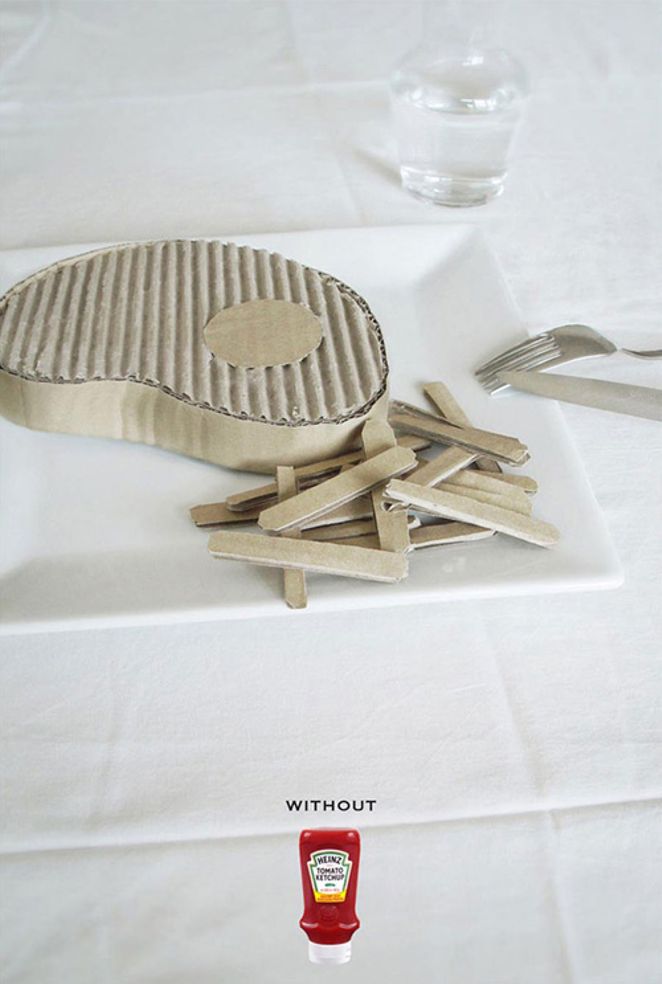
Here are some videos and print ads. What’s the message?
- Summarize the argument in one sentence (use the basic sentence pattern).
- Write a short passage (2-3 paragraphs) which describes in some detail each key term in the argument (this is a vital step in every report, newspaper editorial or academic report).
- Evaluate the argument. Do you think it is persuasive? Why or why not?
Apple Think Different
Nissan Leaf electric car.
Print ad for ketchup
Teach writing and critical thinking skills
In the ebook Teach Writing Thinkingly, you get 20 lessons that help students improve composition style and mechanics and learn language skills to express and critique arguments and ideas. Click HERE for details.
Teach writing?
Get the ebook Teach Essential Writing Skills. Transform the quality of EFL student writing by focusing on four essential skills. Click here for details about the ebook that should be part of every writing teacher’s resource library.

Save time. Teach well.
Cut your lesson prep time with this colossal collection of ESL resources that stimulate language learning and critical thinking. Simplify your lesson planning because teaching should be a joy, not a chore.